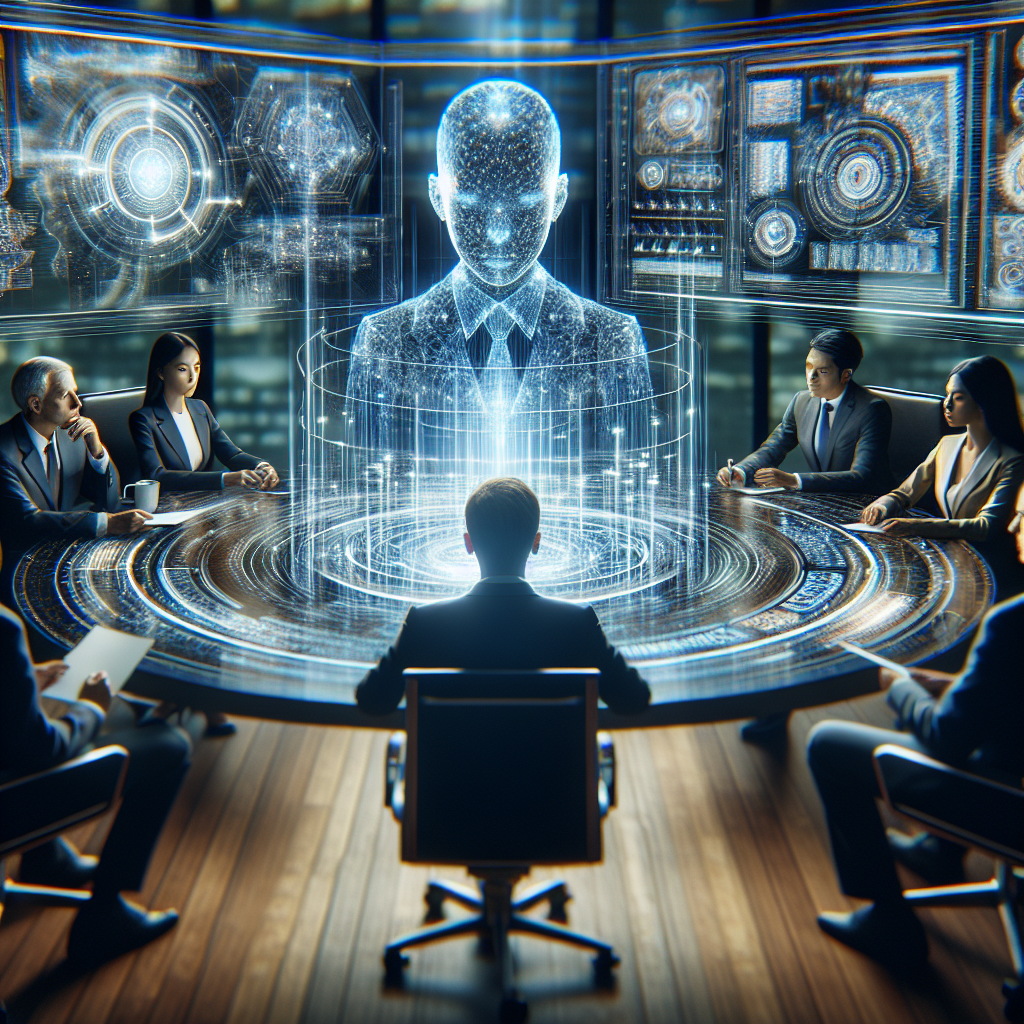
AI offers transformative potential across industries, but business leaders must wisely integrate it while preserving essential human skills. As AI grows in influence, it’s crucial to balance technology with emotional intelligence and human insights to maintain effective leadership and team dynamics.
Understanding AI’s Role in Modern Business
Artificial intelligence (AI) has become an integral pillar in reshaping modern business landscapes. It has moved beyond being just a technological marvel to a pivotal enabler of enhanced productivity and operational efficiency across various sectors. Businesses have embraced AI, integrating it into several core functions, ranging from customer service to manufacturing, and even complex areas like financial analysis and healthcare management.
In customer service, AI-driven chatbots provide instant responses and solutions to customer inquiries, leading to faster problem resolution and enhanced customer satisfaction. These chatbots are increasingly capable of handling more complex interactions thanks to natural language processing and machine learning algorithms. This reduces wait times and improves efficiency, significantly transforming the customer experience.
In manufacturing, AI’s predictive analytics help in maintaining equipment and managing the supply chain more efficiently. The integration of AI in predictive maintenance allows companies to foresee machinery breakdowns, ensuring that they are serviced before failure, thus reducing downtimes and ensuring smooth production flows. AI market trends indicate a rising inclination towards these proactive measures, empowering industries to optimize their processes and resources.
Financial institutions leverage AI to evaluate risks, detect fraudulent activities, and simplify trading decisions. AI systems analyze vast datasets swiftly, providing insights that help in making informed decisions, enhancing transaction security, and increasing transparency. AI platforms in finance often use machine learning to detect unusual patterns, which could signal fraudulent behavior, ensuring quicker intervention.
Healthcare is another critical domain where AI is making substantial contributions. AI tools assist in diagnosing diseases with remarkable accuracy and speed, from analyzing medical images to predicting patient outcomes based on historical data. AI applications in healthcare are not just transforming diagnosis but also in personalized treatment plans, thereby significantly enhancing patient care and operational efficiency.
AI is also transforming HR functions by automating repetitive tasks and refining hiring processes. AI-driven applications screen candidates by matching qualifications and experience with job requirements, reducing human biases, and enhancing workplace diversity. Furthermore, AI aids in personalizing employee development plans, thereby bridging skills gaps by offering targeted training and development programs.
In retail, AI drives personalized marketing by analyzing customer preferences and shopping behavior. This allows businesses to offer customized recommendations that align with customer interests, improving sales and enhancing customer loyalty. AI-powered inventory management systems ensure optimal stock levels and reduce wastages, balancing supply with demand aptly.
Generative AI, a rapidly evolving subset of AI, is making waves in areas such as content creation and product design. By generating creative outputs from textual prompts or data inputs, generative AI provides valuable insights and assists in innovative product development. Industries deploying generative AI are witnessing transformation through the generation of new ideas and designs that traditional methods might not have explored.
However, a significant transformation brought by AI is in decision-making processes. AI tools sift through extensive data to offer actionable insights, facilitating rapid and evidence-based decisions. Businesses now rely on these insights to refine their strategies, improve products, and capture market opportunities more effectively. While AI excels at data-driven decision-making, its limitations in understanding human emotions or values present a need for ongoing human involvement, particularly in leadership roles.
The rise of AI in business also presents implications for labor markets and workforce dynamics. While AI handles monotonous and data-heavy tasks, human skills in areas such as creativity, empathy, and critical thinking are irreplaceable. These soft skills complement AI capabilities, and together they forge an effective team dynamic.
In the realm of leadership and teamwork, emotionally intelligent leadership remains irreplaceable. While AI can crunch numbers and offer structured outputs, navigating complex interpersonal relationships or nuanced emotional contexts requires distinctly human insights. Thus, the equilibrium between AI advancements and human ingenuity becomes critical. Leaders today focus on leveraging both, enhancing overall business performance.
Moreover, the ethical aspect of AI integration into business functions cannot be overlooked. Companies adopting AI must consider the implications on privacy, data security, and the potential bias in AI algorithms. Human oversight ensures that AI applications function within ethical boundaries and in a manner that aligns with societal norms and values.
The increasing incorporation of AI into business operations signifies a paradigm shift—a shift that reflects both opportunities and challenges. Businesses that successfully integrate AI align it with strategic objectives, pairing technological prowess with human intellect. This synergy fosters transformative business landscapes, a topic further explored in the context of business automation revolutions.
In summary, the integration of AI in various business functions across industries is redefining the pathways to efficiency and innovation. Navigating this AI integration requires an understanding of the balance between technological advancement and human qualities. As businesses adopt advanced AI solutions, they should not only focus on technological capabilities but also prioritize the essential human skills that drive organizational success and resilience.
Lessons from Over-Reliance on AI
The enthusiasm for integrating AI into various business processes is undeniable, promising an unparalleled boost in efficiency and decision-making. However, an over-reliance on AI can obscure inherent risks and limitations, leading to potentially costly misjudgments. Businesses often mistake AI’s capability for infallibility, overlooking the necessity of human oversight and the unique competencies that humans bring to the table.
AI’s limitations become glaringly apparent in its fundamental lack of emotional intelligence. It processes data but cannot grasp the nuances of human emotions and relationships. In sectors like customer service, AI can handle routine inquiries efficiently but fails to replicate the warmth and understanding a human interaction provides. Empathy, an inherently human trait, remains irreplaceable. For instance, resolving a complaint involves more than generating automated responses—it requires understanding the customer’s emotional state and showing genuine concern. Without such soft skills, AI-driven solutions risk appearing indifferent or dismissive.
The pitfalls of excessive AI dependency have been exemplified in some high-profile missteps. One notable case involved a legal firm where an AI program fabricated case data, leading to severe reputational damage. This incident highlights the critical need for human oversight in verifying AI-generated information. Blindly trusting AI not only risks operational efficiency but can also jeopardize legal and ethical standards. A lack of proper human intervention can amplify these errors, as AI’s decisions are only as good as the data fed into it—often resulting in biases being incorporated into its operations.
Moreover, AI’s inability to simulate the creative and strategic thinking that humans excel at poses a significant challenge. Business success often hinges on innovation and the ability to think outside the box, skills most AI lacks. Over-reliance on AI for strategic decisions can result in a stagnation of creativity, as AI-driven analytics tend to reinforce existing strategic frameworks without pushing boundaries. Human insights born from experience and intuition play a crucial role in making bold, visionary choices. Ultimately, a business that leans too heavily on AI risks developing a blinkered approach to strategy, lacking the diversity of thought that human intervention naturally provides.
Furthermore, AI’s limitations also manifest in its struggle to handle scenarios requiring personal judgment. In human resources, for example, AI can efficiently screen resumes but cannot evaluate soft skills in candidates, like teamwork or leadership. Judging character, potential, and cultural fit demands a nuanced understanding beyond pattern recognition—an understanding that humans possess naturally. Relying solely on AI in hiring can lead to overlooking candidates who would excel due to their interpersonal skills, which are essential for synergy in business environments.
In retail and marketing, AI algorithms can predict consumer behavior based on data but fail to consider the subtleties of human behavior that influence purchasing decisions. Emotional currents, spontaneous decisions, and cultural trends are often unpredictable and nuanced, factors that AI cannot estimate accurately. Here again, the human touch becomes essential, complementing AI by interpreting data with creativity and understanding of current socio-cultural contexts. Without human curation of AI insights, businesses risk making misinformed decisions that do not resonate with their target markets.
Highlighting these examples underscores the necessity for businesses to recognize and implement a balanced approach. Emotional intelligence, creativity, and ethical considerations—qualities deeply rooted in humanity—cannot be replicated by AI. Business leaders must learn to value these human elements, ensuring they have an integral place alongside AI-driven operations. Navigating this balance requires a firm commitment to maintaining human oversight and judgment, ensuring AI acts as a supportive tool rather than a substitute for human competence.
Valued in this context are empathetic communication and negotiation, skills that are quintessentially human. They ensure businesses remain connected on a human level with clients, employees, and partners. Empathy enables a deeper connection, understanding, and responding to individually felt needs, fostering stronger relationships and trust. Negotiation requires navigating complex, often emotional, dynamics that AI cannot appreciate. Human presence in such interactions ensures that solutions meet emotional and practical needs.
Ultimately, AI should not be viewed as a panacea for all business challenges. Instead, it should support and augment human intellect. Business leaders must promote a culture where AI and human skills coexist, encouraging teams to develop soft skills that AI cannot replace. Through nurturing human creativity, ethical reasoning, and emotional intelligence, companies can navigate the complex dynamics of modern business environments.
Balancing AI integration with human elements ensures companies are equipped to handle the complexity and unpredictability of the business landscape. This approach fosters a truly innovative and adaptive organization where AI complements rather than replaces human insight and emotional intelligence. As businesses continue to weave AI technologies into their operations, it is imperative to navigate the integration process wisely, learning from pivotal lessons in over-reliance to craft enhanced, resilient, and dynamic business strategies.
Practical Strategies for Balanced Integration
For business leaders eager to integrate AI while preserving indispensable human elements, the challenge is to align technological advancements with human centricity. The first step in achieving this balance is to recognize AI as a tool that can perform data analysis and prediction, but also needs human oversight for decisions that involve emotional intelligence and context-awareness. To navigate this terrain effectively, leaders must focus on crafting strategies that integrate AI without sacrificing the human touch.
One practical approach for integration is to assign AI the role of handling structured data analysis and predictive tasks. In areas such as supply chain forecasting, AI models can analyze large datasets swiftly and provide insights into trends and efficiencies. However, for decisions impacting employee well-being or customer satisfaction, human oversight should prevail. For instance, AI can identify patterns in employee productivity and suggest changes, but decisions about performance evaluations should consider human intuition and empathy.
Another facet of balanced integration is to foster an environment that encourages continuous human skill development. As AI takes on more repetitive tasks, employees must be equipped with complementary skills that enhance their roles. Training programs focusing on emotional intelligence, critical thinking, and communication are essential. Such skills are irreplaceable by AI and ensure that the human workforce remains agile and adaptive.
Incorporating AI into meetings and decision-making processes offers a blend of efficiency and human insight. Virtual assistants can summarize meeting agendas or track performance metrics, freeing up human participants to focus on strategic dialogue and creative problem-solving. However, it is crucial that these AI-generated summaries are reviewed by human professionals. Their nuanced understanding can catch errors or misinterpretations that AI might miss.
AI-powered chatbots and customer service tools also present opportunities for balanced integration. While they efficiently handle common inquiries and provide basic information, the transition to human service representatives must be seamless for complex issues. Customers facing emotionally charged situations require empathy and personalized solutions that only humans can provide.
To leverage AI as a tool that augments human-driven intelligence, businesses must establish clear protocols for AI usage. Regular audits of AI systems can identify biases or errors, ensuring the integrity of the information provided. By establishing a feedback loop involving human and AI interactions, companies can refine their AI tools and keep them aligned with human ethical standards and business goals.
It’s also important for businesses to cultivate a company culture that values the synergy of technology and humanity. Encourage teams to view AI as an ally rather than a threat. Celebrate human creativity and intuition as equally crucial to organizational success as data-driven insights. By fostering a culture of collaboration between humans and machines, leaders ensure that both can thrive.
In terms of strategic technology planning, involving a diverse group of stakeholders can provide a well-rounded perspective on AI integration. Gathering input from various departments helps in identifying areas where AI can make a meaningful impact without overshadowing human roles. This inclusive approach minimizes resistance to AI and promotes a shared vision of innovation and human value.
Moreover, organizations should embrace AI in a phased manner. Incremental implementation allows companies to test AI solutions, learn from initial trials, and address any human concerns that arise. It is vital to set realistic goals for what AI can achieve and to continually reassess these as AI develops and organizational needs evolve.
Lastly, clear communication about the role of AI and its limits ensures transparency within the organization. Employees should understand how AI assists them and when their expertise is crucial. This clarity helps demystify AI and promotes trust, which is essential for a collaborative work environment.
Given the rapid evolution of technology, it’s essential to stay updated with industry trends and AI capabilities. Resources and insights from Artificial Intelligence Unveiled offer valuable knowledge to keep business leaders informed about AI developments and their potential applications. Remaining informed helps leaders anticipate shifts and prepare their teams to harness AI effectively.
To conclude, the balanced integration of AI in business requires actionable strategies that uphold the synergy between technology and human elements. By focusing on AI as an augmentative tool, developing human-centric skills, and fostering transparency and collaboration, leaders can create a harmonious tech-human ecosystem that ensures the success of both AI and humanity in business.
Final words
AI is a powerful tool for businesses, offering efficiency and data-driven insights. However, leaders must balance its use to preserve unique human qualities and maintain effective leadership. A thoughtful approach is essential to harness AI while retaining emotional intelligence and personal connection.