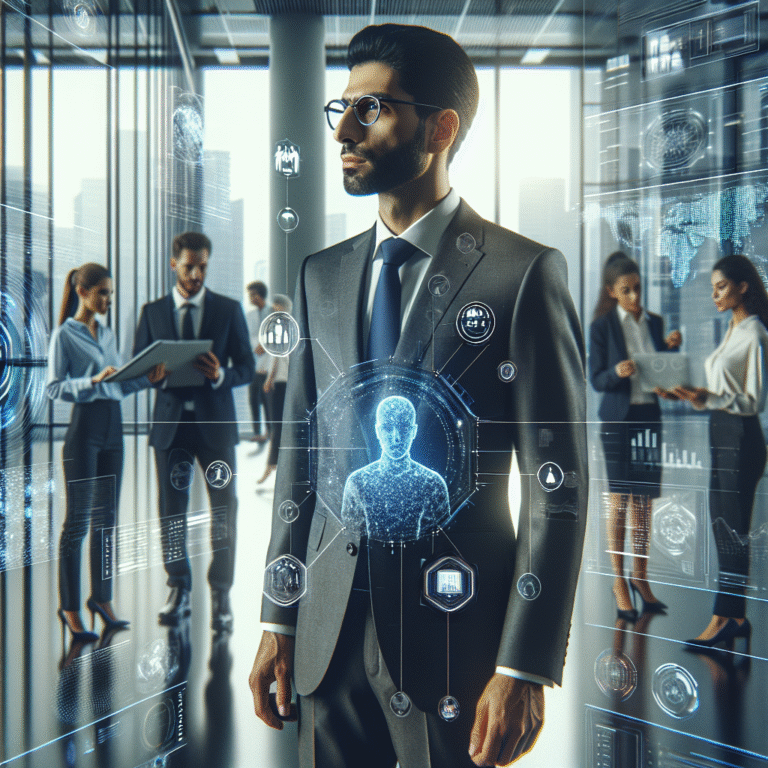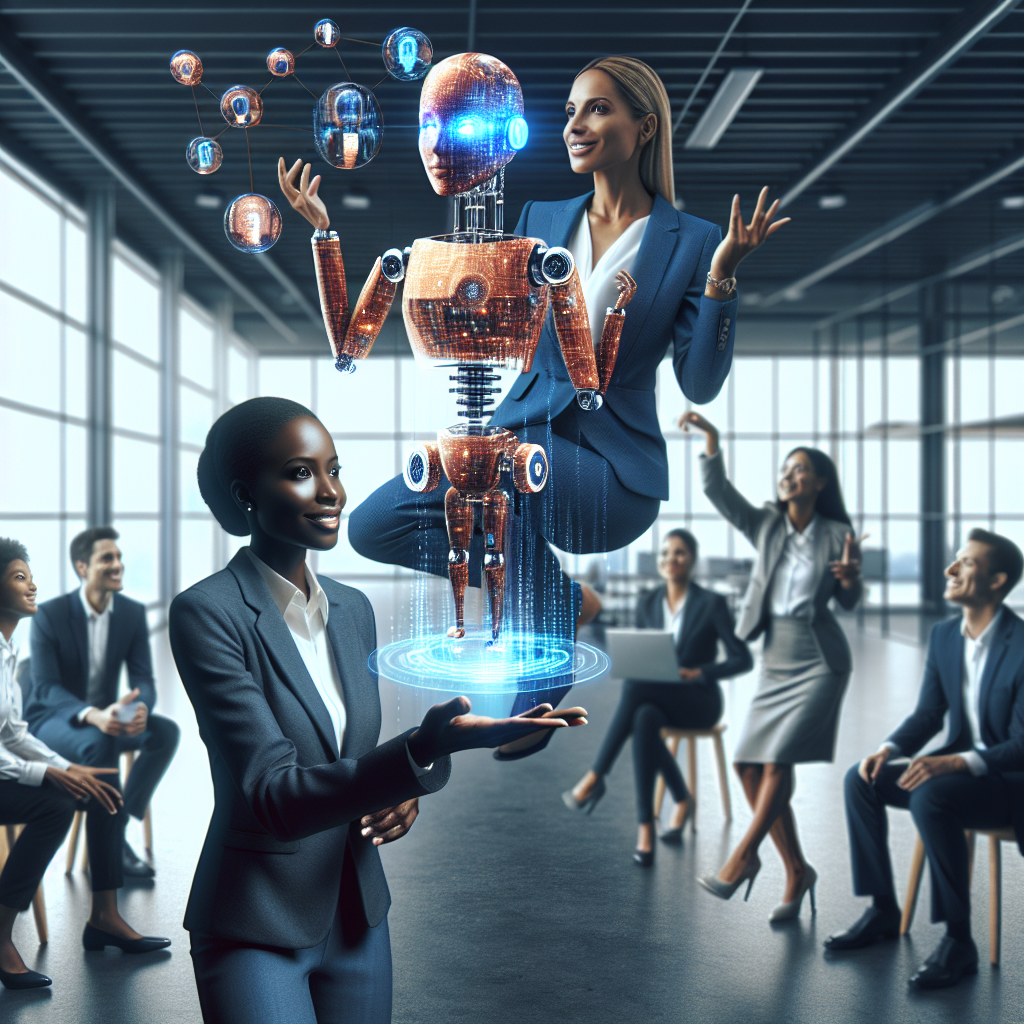
The widespread rise of artificial intelligence in business promises increased productivity, but also poses challenges. This article explores the impact of AI integration, discussing its benefits and potential pitfalls. We examine why balancing AI with human intuition is essential for successful business leadership.
The Rise and Impact of AI in Business
The rapid ascent of AI since 2023 has fundamentally reshaped numerous business functions. This transformative era has seen AI not just as a tool but as an integral component driving productivity and innovation. Many industries have embraced AI’s potential to revolutionize everything from automation to insights derived from vast datasets. The landscape is evolving, with businesses increasingly turning to AI to bridge gaps in productivity and address skills shortages effectively.
AI’s capability to analyze immense volumes of data with precision has unlocked new dimensions in decision-making processes. In sectors like finance, real-time data analysis enables companies to make swift, informed decisions, improving efficiency. Manufacturing has witnessed a surge in the adoption of AI-powered systems, enhancing production lines while minimizing errors. This integration has contributed to significant cost reductions and comprehensive forecasting capabilities, allowing businesses to adapt to market demands quickly.
The service industry has equally benefited from AI. Automation of customer service through chatbots, for instance, has streamlined client interactions, delivering immediate responses and freeing up human resources for more complex customer concerns. E-commerce platforms have capitalized on AI’s predictive capabilities to personalize user experiences, enhancing customer satisfaction and boosting sales.
As businesses adapt to these changes, surveys indicate a notable increase in investment directed toward AI technologies. This shift is evident as companies recognize AI’s role in sustaining competitive advantage. The accelerating trend of AI investment is not just reshaping internal processes but also defining industry standards for productivity and efficiency. These AI market trends underscore the undeniable magnitude of AI’s imprint on modern business practices.
Another noteworthy development is the application of AI in addressing skills shortages across various sectors. With rapidly evolving technological landscapes, companies face challenges in hiring skilled professionals. AI offers a dual solution: automating routine tasks and upskilling employees through training programs enhanced by AI-driven insights. This approach not only alleviates the pressure of skills shortages but also empowers existing workforces, creating a dynamic, adaptable working environment.
Moreover, the rise of AI has opened new avenues in healthcare, a sector long awaited to catch up with technological advancements. The potential of AI-driven solutions in healthcare was highlighted by influential figures, including Tony Blair, who has called for an accelerated adoption in this critical area. AI’s capabilities in diagnosing diseases, optimizing treatment plans, and managing patient data have shown promise in improving healthcare quality and accessibility.
Blair’s standpoint emphasizes the urgency of integrating AI to address pressing healthcare challenges, such as resource allocation and response times in medical emergencies. AI algorithms can process medical data at unprecedented speeds, suggesting treatment protocols that improve patient outcomes. This integration promises to overcome many limitations currently faced by healthcare providers worldwide, potentially transforming the industry.
However, the impact of AI extends beyond productivity and skills management. It also sparks conversations on its broader implications for economic and social dynamics. More than ever, businesses must navigate the ethical considerations surrounding AI deployment, ensuring that equity and privacy are upheld amid technological advancements. The dialogue around responsible AI usage is crucial as we move toward increasingly AI-integrated business environments.
Industries must confront the delicate balance between maintaining human elements in business processes and embracing technological efficiency. As businesses capitalize on AI’s potential, the importance of soft skills such as empathy and human intuition remains a key focus for sustaining effective leadership. This balance is crucial to ensuring that AI serves as a complement to, rather than a substitute for, human capabilities.
AI’s impact on business results in both practical and philosophical shifts. Practical changes involve streamlining operations and opening new markets through data insights. On a broader philosophical level, the intersection of AI and business challenges long-held notions of work and productivity.
In summary, AI’s rise since 2023 marks a profound shift in business operations, enhancing productivity while addressing skills shortages. It continues to transform industries, pushing boundaries of what is possible. Yet, amidst these advances, businesses must remain vigilant, ensuring AI’s deployment aligns with ethical practices and human values. As the journey of AI integration unfolds, the equilibrium between technology and humanity will define the future of business and its impact on society.
The Role of Emotional Intelligence in Leadership
The integration of artificial intelligence in business marks a transformative shift, but it also highlights the irreplaceable essence of human qualities like emotional intelligence. Modern leadership faces challenges that AI alone cannot solve, needing the nuanced, human touch to navigate effectively. Emotional intelligence, the capacity to understand and manage human emotions, proves to be an indispensable trait of successful leaders. Despite AI’s growing prominence, soft skills such as empathy, communication, and teamwork continue to play crucial roles.
AI excels in processing data at speeds and with precision unimaginable for humans. Nevertheless, it struggles with interpreting the subtle cues inherent in human interactions, where emotional intelligence thrives. Recognizing and responding to emotions with empathy can mean the difference between a successful resolution and a misunderstanding. Empathy, perhaps the cornerstone of emotional intelligence, allows leaders to connect and respond to their team’s needs, motivating and guiding them.
The business landscape is often compared to a competitive arena. Here, parallels can be drawn with elite sports, where data analysis meets instinctual decision-making. Whether it’s in basketball, soccer, or tennis, athletes and coaches rely on a combination of statistics and gut instincts. Their decisions are not driven solely by analytics. Experience and emotional insight guide them. This balance of data and intuition offers a valuable lesson for business leaders. It emphasizes that leadership decisions need not be devoid of human insight.
AI can support decision-making by providing objective analyses, identifying patterns, and predicting outcomes. However, there remains an intrinsic value in human intuition, often derived from experience, that AI cannot replicate. While AI can suggest strategies based on historical data, it cannot comprehend the morale within a team or the ethical implications of a decision. This highlights the importance of emotional intelligence: processing these complex human factors that quantitative analyses might overlook.
Balancing AI with human insights requires an understanding of the strengths and limitations of each. AI can provide efficiency and precision. Human leaders bring empathy and creativity to the table. For instance, conflict resolution in the workplace extends beyond identifying the source of a problem. It requires understanding interpersonal dynamics and addressing emotional undercurrents, where effective communication is vital. A leader who listens actively can build trust and openness, allowing for more genuine exchange and collaboration among team members.
Teamwork thrives on the premise that diverse perspectives lead to more innovative solutions. Effective leadership encourages collaboration where each team member feels valued. AI might streamline operations, but fostering an environment where ideas flourish is a distinctly human capability. Leaders equipped with emotional intelligence can identify and harness the unique strengths of each team member, creating a synergistic effect that drives success.
The balance between AI and human insight calls for mastery of digital tools without forgetting the essence of human-driven leadership. Leaders must leverage AI to augment their capabilities while cultivating emotional intelligence to navigate challenges that demand a human touch. Emotional insight helps in maintaining the human connection, preserving the morale and motivation of the workforce.
Elite sports offer an informative analogy. Coaches utilize data on player performance, but they also rely on their observations and psychological understanding. They read the body language and emotional states of athletes, crafting personalized encouragement that a data set could not provide. This enables them to adjust strategies dynamically and foster resilience in teams during high-pressure scenarios.
As AI continues to integrate into businesses, maintaining a balance between emotional intelligence and analytical prowess becomes crucial. It requires continuous development of soft skills among leaders. A culture that prioritizes empathy and communication can thrive amidst technological advancements.
The crucial interplay of AI in strategic planning and human skills in execution can lead to transformative leadership. Emotional intelligence is indispensable, enabling leaders to connect with their teams and respond to challenges intuitively. It is also the thread that holds the intricately woven fabric of a successful organization.
With leaders who understand the importance of both AI’s analytic capabilities and the softer, human aspects of leadership, organizations are better equipped to navigate the complex terrain of modern business. Emotional intelligence becomes the compass by which leaders can chart their course, guiding their teams toward collective goals.
A balanced approach to leadership, where AI is harnessed for its strengths and human intelligence provides emotional and ethical guidance, fosters an environment of trust and innovation. This perspective allows for more resilient, adaptable organizations capable of thriving amidst change. As businesses continue to evolve, integrating these facets of leadership with AI serves as an enduring strategy for success.
Avoiding Over-reliance on AI
The trend toward automation and artificial intelligence (AI) in today’s business landscape raises significant concerns about over-reliance on technology. While AI can streamline operations and improve efficiencies, leaning too heavily on it may induce adverse effects, notably the depreciation of leadership roles and the erosion of human decision-making capabilities. These risks necessitate a strategic approach to AI integration, where businesses carefully evaluate both immediate benefits and potential long-term repercussions.
Over-reliance on AI might lead to the diminishing roles of leaders within organizations. Leaders are not only responsible for guiding teams but also for making crucial decisions that hinge on understanding nuanced human behaviors and emotions. AI, despite its sophisticated algorithms, cannot replicate this depth of emotional intelligence. When decisions rest solely on AI analytics, the foundational human aspects that drive company ethos and culture might erode. This dilution of leadership roles could result in a loss of direction and a diminished ability to navigate complex human relations within an organization.
Furthermore, excessive dependence on AI can result in the marginalization of human decision-making. Relying on AI for decision-making tasks might inadvertently cause a decline in individuals’ critical thinking skills. Over time, employees may become disengaged as they defer more responsibility to AI systems, thereby curtailing their capability to innovate and adapt to new challenges. Moreover, it introduces the risk of blindly trusting AI-generated insights without the necessary human oversight, which can lead to strategic missteps in business operations.
An overlooked but considerable long-term cost of over-relying on AI is the risk of technological obsolescence. AI technologies evolve rapidly, and what may seem cutting-edge today might become outdated tomorrow. Businesses that heavily invest in AI with the intent of it being a complete replacement for human roles could face enormous expenses in continuously updating or replacing these systems. Additionally, such reliance might result in companies losing their competitive edge when technology does not deliver expected outcomes, leading to reduced profitability and potential reputational damage.
The negative impacts extend into workplace morale and employee engagement. As AI systems assume tasks traditionally performed by humans, employees may feel undervalued or threatened. This perception can lead to decreased job satisfaction and increased turnover rates. Cultivating an atmosphere where employees feel their contributions are supplementary to technology, rather than replaceable by it, is essential for maintaining an engaged workforce.
Strategies for maintaining a healthy balance between AI use and human skills development must focus on positioning AI as a supportive tool rather than a complete replacement. Businesses can adopt a three-pronged approach to achieve this balance.
Firstly, organizations need to foster an environment of continuous learning where employees are encouraged to develop new skills. By investing in training programs, companies can empower their workforce to work synergistically with AI, promoting both technological literacy and the development of unique human skills such as creativity and problem-solving. Blending technical training with soft skills development ensures employees remain relevant and resourceful, despite the advancing capabilities of AI.
Secondly, implementing a hybrid decision-making model can maintain human insight at the forefront of business operations. By creating a framework where AI provides data-driven insights followed by human oversight and intervention, organizations can ensure nuanced decision-making aligns with company values and culture. Such models can blend the analytical prowess of AI with the intuition and creativity intrinsic to human leaders. This approach exemplifies a balanced integration of AI where the technology enhances human capabilities rather than diminishes them.
Additionally, businesses need to place a greater emphasis on ethical AI usage. Strategies must include regular audits to assess the balance of AI and human interactions within processes. Such evaluations can prevent technology from overshadowing human judgement and keep the ethical implications of AI use in check. It fosters a responsible AI adoption model that views technology as a partner rather than an outright decision-maker within the organization.
By cultivating a culture that sees AI as an augmentative force, businesses can facilitate a productive collaboration between human intuition and technological automation. This collaboration bridges the gap between hard data and human empathy, supporting a robust and sustainable path forward.
Finally, enterprises must remain agile to adjust AI strategies in alignment with evolving technologies and workforce dynamics. Flexibility in strategy formulation ensures businesses can pivot according to technological advancements and market demands while maintaining the core human element integral to decision-making processes. This agility keeps organizations resilient in an era increasingly defined by rapid technological progress.
In conclusion, AI holds immense potential to transform business operations, but the key lies in maintaining a judicious balance. By enhancing technological engagement without losing sight of human capabilities, organizations can leverage AI’s strengths to support, rather than replace, the human elements critical to business leadership and decision-making. Emphasizing the collaborative nature of AI and human intelligence can create a dynamic environment that propels businesses towards sustained success. For a comprehensive approach to integrating technology effectively in business, you might consider reading on maximizing efficiency with tools that enhance human skills.
Final words
AI integration offers significant advantages but demands caution. Effective leaders should harness AI potential while valuing human intuition and skills. Striking this balance is crucial for maximizing productivity without sacrificing human insight.